Educational Articles
Complete Flyer & Leaflet Printing Guide for Businesses
A complete flyer & leaflet printing guide helps businesses improve campaign performance by aligning design decisions with measurable marketing outcomes. Many organizations still treat print as a final production stage, but strategic decisions made before production determine success or failure. When businesses align design, format selection, and print specifications, they turn printed materials into structured marketing assets that directly support conversion goals.
Printed communication performs differently depending on audience intent and environmental context. Flyers support rapid attention capture and immediate response, while leaflets enable structured storytelling and deeper engagement. This distinction affects how businesses design content, select materials, and define distribution methods.
Modern marketing requires businesses to treat print as part of a broader ecosystem. A complete flyer & leaflet printing guide helps teams evaluate format selection, size strategy, paper specification, and distribution logic before production begins. This planning stage reduces errors and ensures consistency across all campaign elements.
Businesses also improve results when they understand how physical materials interact with audience behavior. Attention spans, reading environments, and exposure time all influence how people respond to printed messages. When companies align format with behavior, they improve engagement quality and campaign efficiency.
A complete flyer & leaflet printing guide ensures that every decision supports a clear objective. It transforms print from a static output into a performance-driven system that connects communication design with real-world marketing outcomes and long-term business growth.
What Are Flyers and Leaflets, and How Do They Differ?
Understanding printed formats requires analyzing how each tool influences communication effectiveness within real marketing environments. A complete flyer & leaflet printing guide helps businesses select formats based on audience behavior rather than visual preference.
Flyers focus on immediate communication. Businesses use flyers when they need fast visibility, quick decision-making, and direct response. Flyers work best in high-traffic environments where audiences spend only seconds interacting with content. The structure remains simple, focusing on one core message supported by a strong call-to-action.
Leaflets support structured communication. Businesses use leaflets when they need to explain services, build trust, or guide users through detailed information. The folded structure allows segmented content delivery, which improves comprehension and engagement over time.
This difference directly affects marketing strategy. Flyers work for awareness-driven campaigns, while leaflets support consideration and decision stages. Businesses that align format with funnel stage achieve higher conversion efficiency and better user experience.
Audience interaction also differs significantly. Flyers encourage instant reaction, while leaflets encourage reading progression. This difference influences layout decisions, content depth, and design hierarchy.
A complete flyer & leaflet printing guide helps businesses match format selection with communication goals. When companies choose formats based on intent, they improve clarity, reduce waste, and strengthen overall campaign performance across multiple marketing channels and audience segments.
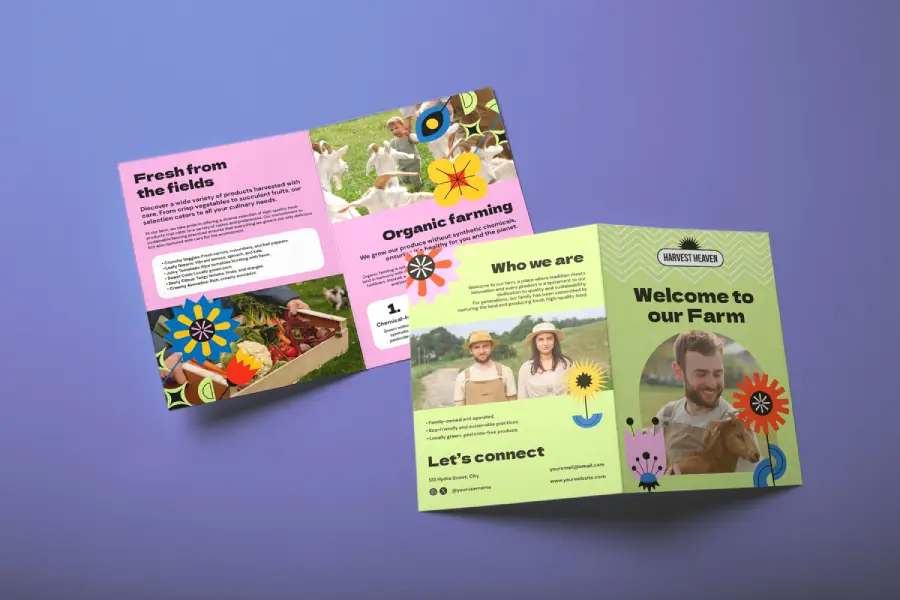
complete flyer & leaflet printing guide: Print Setup & File Preparation
A complete flyer & leaflet printing guide emphasizes technical preparation as a critical step in achieving accurate and high-quality print output. Businesses often lose efficiency because they ignore pre-press requirements and send unoptimized files to production teams.
File format selection plays a foundational role in maintaining design integrity. Businesses must use print-ready formats that preserve vector quality and image resolution throughout the production process. This ensures that printed materials maintain sharpness and consistency across all outputs.
Resolution control directly affects visual quality. Low-resolution images create pixelation and reduce brand credibility. Businesses must ensure all visual assets meet professional print standards before final submission to avoid quality loss during production.
Margin and bleed setup protects critical content during trimming. Designers must define safe zones where no important text or visual elements appear. Without proper margin control, cutting processes may remove essential information and damage the final output.
Color accuracy also requires attention. Businesses must ensure correct color profiles before production to maintain consistency between digital design and printed results. This prevents unexpected shifts in tone or branding.
A complete flyer & leaflet printing guide ensures that businesses follow structured pre-press workflows. This approach reduces production errors, improves efficiency, and guarantees consistent output quality across all flyer and leaflet campaigns, supporting better marketing performance and operational reliability.
Choosing the Right Size for Flyers and Leaflets
A complete flyer & leaflet printing guide highlights size selection as a strategic decision that directly influences audience engagement and message clarity. Businesses often underestimate this factor, but size determines how users perceive and process printed information.
Smaller formats support mass distribution and fast consumption. Medium formats balance readability and content space, while larger formats allow deeper communication but require stronger design structure. Each size supports a different marketing objective and audience interaction model.
| Type | Size | Use Case | Key Benefit | Limitation |
|---|---|---|---|---|
| Flyer | A6 | Mass distribution | Very low cost, high reach | Limited message space |
| Flyer | A5 | Local campaigns | Balanced cost & readability | Limited depth |
| Flyer | A4 | Detailed messaging | More space for content | Can feel cluttered |
| Leaflet | A4 Folded | Service brochures | Structured storytelling | Needs careful layout |
| Leaflet | A5 Folded | Compact guides | Good balance of clarity & size | Limited detail space |
Size selection also affects layout planning. Businesses must match content density with available space to avoid overcrowding or excessive emptiness. Poor balance reduces readability and weakens communication effectiveness.
Environmental context also influences performance. In busy urban environments, smaller formats perform better because audiences have limited attention time. In controlled environments, larger formats support deeper engagement and improved comprehension.
A complete flyer & leaflet printing guide ensures that businesses select size based on communication intent, audience behavior, and distribution context. When companies align these factors, they improve clarity, reduce inefficiency, and strengthen campaign performance across different marketing environments.
Different flyer and leaflet sizes serve different communication roles, and the overall structure of the material must align with how much information the campaign needs to deliver. In many cases, businesses also need to decide whether a single-sided or double-sided layout better supports their communication goals, since this choice directly influences both cost efficiency and message impact.
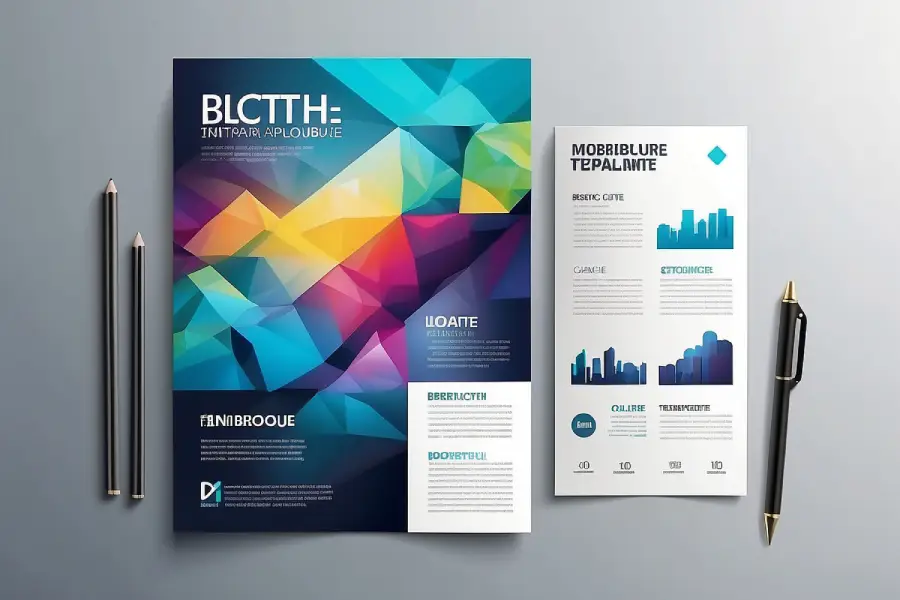
Visual Design and Brand Identity
A complete flyer & leaflet printing guide positions visual design as a core communication system that shapes brand perception and audience engagement. Design decisions influence how quickly users understand messages and how strongly they trust the brand.
Color selection defines emotional response and brand identity. Businesses must maintain consistent color systems across all printed materials to strengthen recognition and improve trust. Inconsistent color usage weakens brand authority and reduces campaign effectiveness.
Typography controls readability and structure. Businesses must use clear font hierarchies to guide attention from headlines to supporting information. Strong typographic systems improve clarity and reduce cognitive effort for readers.
High-quality imagery plays a central role in shaping how audiences perceive a brand, so businesses must ensure all visuals maintain proper resolution and clarity before printing. Poor image quality reduces trust and weakens even strong design concepts, especially when teams skip an image quality checklist during preparation.
Layout structure guides user interaction. Designers must organize content in a logical flow that supports natural reading patterns. Proper spacing and alignment improve comprehension and reduce visual fatigue.
A complete flyer & leaflet printing guide ensures that all visual elements work together as a unified system. When businesses align design with content structure and production constraints, they create print materials that improve engagement, strengthen brand identity, and deliver consistent marketing performance across multiple campaigns.
Content Structure in Flyer & Leaflet Printing
A complete flyer & leaflet printing guide shows that content structure directly impacts how well audiences understand and act on printed information, while weak structure reduces focus and campaign performance.
Flyers use a minimal structure with one clear message, a strong headline, and a direct call-to-action to support fast comprehension in high-traffic environments.
Leaflets use layered structures that divide information into sections, guiding readers step by step and improving understanding of more complex messages without overload.
- Clear hierarchy improves message retention by guiding readers through information in a logical sequence that matches natural reading behavior and reduces mental effort during interaction with printed materials.
- Structured flow increases engagement because audiences follow a predictable path that helps them connect ideas and understand value more efficiently.
- Controlled content density prevents confusion by limiting unnecessary information and ensuring each section serves a specific communication purpose.
Strategic use of white space enhances readability by separating content blocks and improving visual focus on key messages
Visual hierarchy ensures users understand what to read first and what to prioritize. Businesses must control typography, spacing, and emphasis to guide attention naturally across the layout.
A complete flyer & leaflet printing guide ensures content structure aligns with communication goals. When businesses design structured information paths, they increase clarity, improve engagement quality, and strengthen conversion outcomes across all print marketing channels.

Common Printing Errors & How They Affect ROI
A complete flyer & leaflet printing guide shows that printing errors directly reduce campaign performance and weaken return on investment. Businesses often invest heavily in design and distribution but fail to control technical accuracy during production, which leads to avoidable losses in both budget and effectiveness.
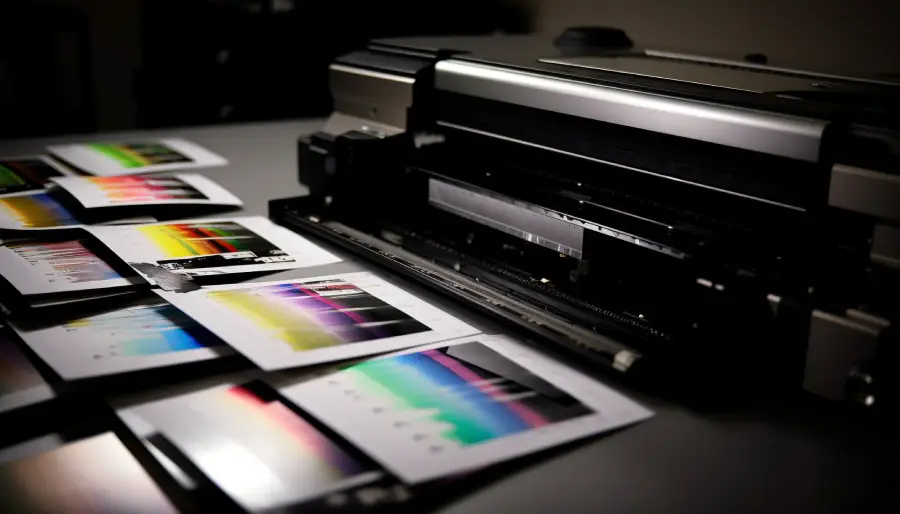
Common printing issues include color shift, banding, misalignment, and low-resolution output. Color shift occurs when the final printed result does not match the original digital design, which disrupts brand consistency and reduces trust. Banding appears as visible lines across images and creates an unprofessional visual experience. Misalignment affects layout structure and makes information harder to read, while low-resolution graphics reduce sharpness and damage overall perception of quality.
These problems usually originate from poor file preparation or the lack of adherence to technical print standards. When businesses skip prepress validation, they increase the risk of production errors that often require reprints, which raises costs and delays campaign execution.
A complete flyer & leaflet printing guide helps businesses prevent these issues by enforcing structured workflows before production begins. Proper resolution settings, accurate color profiles, and correct layout preparation ensure consistent and reliable output quality across all printed materials.
When businesses maintain technical accuracy throughout the production process, they reduce waste, improve efficiency, and strengthen overall campaign performance in flyer and leaflet printing initiatives, leading to more predictable and higher-quality marketing outcomes.
Paper Type & GSM
A complete flyer & leaflet printing guide shows that paper selection directly influences perception, quality, and brand positioning. Paper is not just a material choice; it shapes the physical experience of marketing communication.
Lower GSM papers support mass distribution and cost efficiency. Higher GSM papers improve durability and create a premium feel. Businesses must match GSM with campaign purpose rather than default preferences.
| Application Type | GSM Range | Paper Type | Use Case | Marketing Objective | Key Advantage | Limitation |
|---|---|---|---|---|---|---|
| Flyer | 80–100 GSM | Light Coated / Uncoated | Street distribution, high-volume campaigns | Maximize reach with minimum cost | Very cost-efficient for mass printing | Low perceived premium quality |
| Flyer | 100–130 GSM | Matte | Local promotions, balanced campaigns | Combine affordability with readability | Professional look with controlled cost | Limited premium feel |
| Flyer / Leaflet | 130–170 GSM | Matte / Gloss | Targeted promotional campaigns | Increase engagement and visual impact | Strong balance between quality and cost | Higher cost than entry-level paper |
| Leaflet | 170–250 GSM | Matte | Service brochures, structured content | Improve brand perception and durability | Premium feel with strong readability | Higher production cost |
| Leaflet | 250–300 GSM | Gloss / Laminated | High-end marketing campaigns | Strengthen brand authority and retention | Luxury tactile experience and durability | Expensive and less flexible in folding |
Paper finish also affects perception. Matte finishes improve readability, while gloss finishes enhance color impact. Lamination adds durability and strengthens perceived value.
Businesses must balance cost and quality to achieve optimal performance. Over-investment increases expenses, while under-investment reduces brand credibility.
A complete flyer & leaflet printing guide ensures paper decisions align with marketing goals. When businesses select materials strategically, they improve engagement quality and brand perception across all printed campaigns.
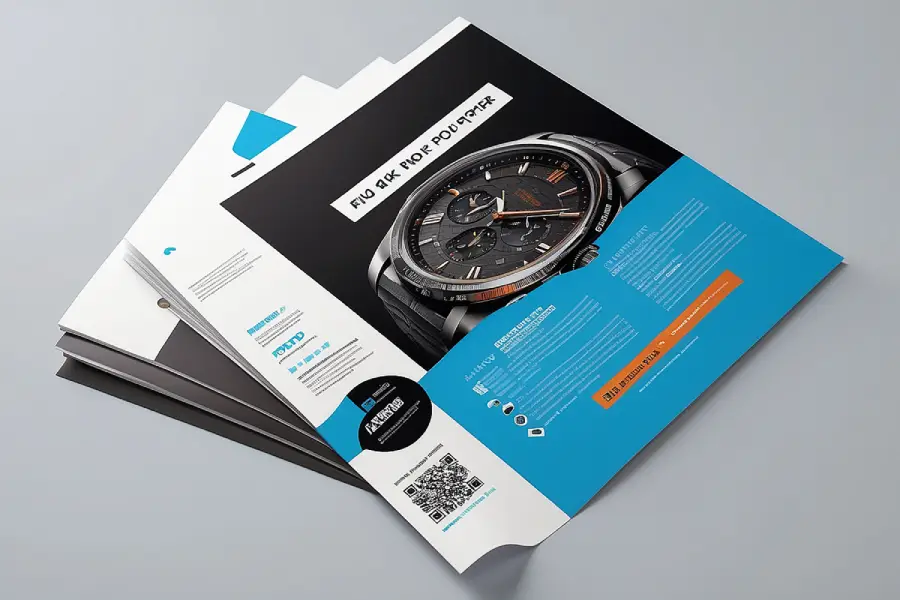
complete flyer & leaflet printing guide: Distribution Strategy
A complete flyer & leaflet printing guide highlights that distribution strategy determines whether print campaigns generate measurable results or remain purely physical outputs, as even strong design fails without proper targeting and timing.
Businesses must align distribution with audience behavior, and accurate print quantity planning becomes essential when production volume does not match real campaign demand.
Flyers work best in high-traffic environments where rapid exposure drives awareness, while leaflets perform better in controlled settings where audiences engage with content more deeply, such as exhibitions or service locations.
- Targeted distribution improves campaign efficiency by focusing resources on high-intent audiences rather than broad exposure. This approach increases conversion probability and reduces wasted distribution effort.
- Audience segmentation improves targeting accuracy by identifying user groups based on location, intent, and behavioral patterns, which ensures higher relevance and stronger engagement outcomes.
- Channel selection increases engagement quality by placing materials in environments where users naturally align with campaign objectives.
- Timing optimization enhances visibility by matching distribution with peak activity periods, improving exposure and interaction rates.
- QR integration connects offline materials with digital platforms, enabling measurable tracking and smoother user transition from print to online engagement.
Timing plays a critical role in performance, and businesses must align distribution schedules with audience availability and campaign urgency to maximize impact. Teams must also plan production timelines carefully, especially when campaigns require standard or express printing options to meet strict delivery deadlines.
Cost Optimization Strategy in Flyer & Leaflet Printing
A complete flyer & leaflet printing guide demonstrates that cost optimization plays a strategic role in building efficient and scalable print campaigns. Businesses often attempt to reduce expenses without evaluating how cost decisions influence overall performance, which can weaken both quality and marketing impact. A balanced approach ensures that cost efficiency and campaign effectiveness work together rather than conflict with each other.
Cost structure in printing depends on several key variables such as paper type, GSM, print volume, and finishing options. Each of these factors directly affects production cost as well as how audiences perceive the final material. Lower GSM options reduce expenses but may decrease perceived quality, while higher GSM improves durability and premium perception but increases total cost.
Print volume also plays a major role in cost efficiency. Larger production runs reduce unit cost, but only when distribution planning ensures full utilization. Without accurate planning, businesses risk overproduction, which leads to waste, or underproduction, which limits campaign reach and reduces marketing effectiveness.
A complete flyer & leaflet printing guide supports businesses in aligning cost decisions with real campaign requirements rather than assumptions or default choices. This alignment ensures that every production decision contributes to both financial efficiency and marketing performance.
Cost optimization becomes most effective when businesses integrate material selection, volume planning, design efficiency, and supplier evaluation into a single structured workflow. This alignment improves ROI, reduces waste, and delivers more consistent and scalable results across flyer and leaflet printing campaigns.
Conclusion
Overall, success in flyer & leaflet printing comes from treating the process as an integrated marketing system, not a standalone production task. Every stage, from defining campaign objectives to selecting formats, designing layouts, setting print specifications, and executing distribution, influences the final outcome. When these elements are not aligned, even high-quality designs fail to generate meaningful engagement or conversions.
Businesses must define communication goals before making operational decisions, then select the right format based on those goals. Flyers work best for fast, attention-driven messaging, while leaflets support structured and information-rich communication. This alignment improves audience understanding by delivering the right message in the right format.
Design consistency with technical print specifications strongly influences brand perception and campaign performance. Businesses must also prepare artwork with the correct print resolution to maintain sharp visuals and professional output quality throughout production.
Distribution strategy also matters because targeted delivery improves performance tracking and supports future optimization through real campaign data.
Ultimately, a structured and data-driven approach turns flyer & leaflet printing into a measurable marketing channel that supports brand growth, improves engagement, and increases conversion rates over time.