Educational Articles
Flyer Printing Lead Times: Standard vs Express Options
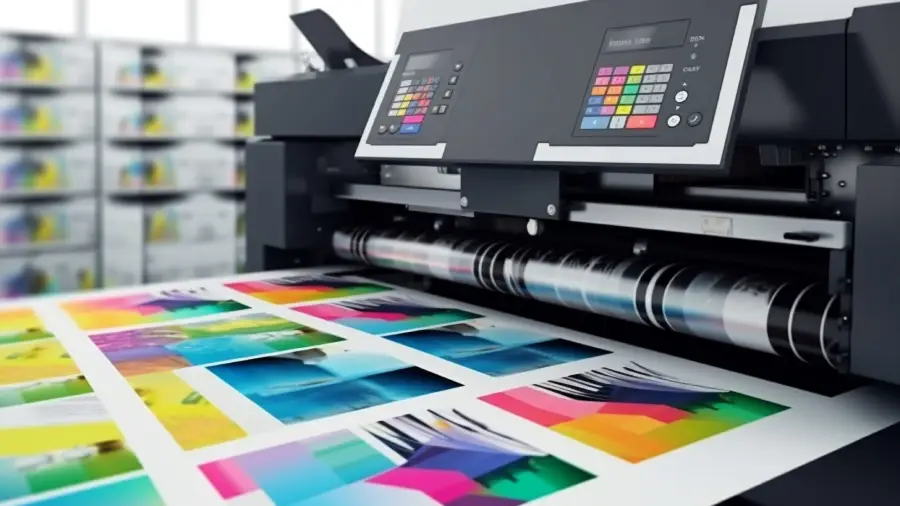
Flyer printing lead times play a decisive role in how businesses plan and execute their marketing activities. The choice between standard and express flyer printing directly influences cost structure, production scheduling, and overall campaign performance. When businesses fail to evaluate flyer printing lead times strategically, they often face delayed distribution, higher production costs, or compromised output quality that reduces campaign effectiveness.
In procurement decisions, timing plays a major role alongside price and design quality. Businesses usually align printing choices with campaign deadlines, distribution windows, and market opportunities. When schedules are flexible, standard printing is preferred due to cost efficiency. When deadlines are strict, express printing becomes the more practical option because faster delivery directly supports campaign execution.
Standard flyer printing operates on a structured production workflow that emphasizes cost efficiency, material flexibility, and consistent quality control. It is most suitable for planned campaigns where timelines are predictable and budget optimization is a priority. Businesses choose express printing for urgent projects where speed matters more than flexibility and extended customization options.
Production timelines also influence operational decisions beyond delivery speed. They affect material selection, finishing availability, and coordination between design and distribution stages. Shorter timelines often reduce flexibility, while longer planning cycles allow more controlled execution and better alignment across the entire workflow.
This overview highlights the key operational differences between standard and express flyer printing and explains how businesses can balance speed, cost, and quality when selecting the most suitable production approach.
.How Standard Flyer Printing Works and When It Is the Better Choice?
Standard flyer printing follows a structured production workflow that prioritizes cost efficiency, consistent quality, and predictable scheduling. In this model, print jobs enter a planned production queue where each stage—from file checking to printing, finishing, and delivery—is executed based on a predefined timeline. This approach allows print providers to optimize machine usage and maintain stable output quality across multiple orders. In this context, Flyer Printing Lead Times are typically longer but more predictable, which supports better planning across marketing operations.
Before production begins, the print team reviews the design file to ensure it meets technical requirements such as resolution, bleed settings, color mode, and print dimensions. Once the print team approves the file, the order moves into the standard production queue. At this stage, production teams process the job alongside other scheduled orders, which helps reduce operational costs and improve resource allocation within the print facility.
Standard flyer printing works best for businesses that operate with planned marketing campaigns. When companies prepare campaigns in advance, they can align design finalization, approval cycles, and distribution schedules with the printing timeline. This coordination reduces pressure on production teams and allows for better control over output quality.
From a commercial perspective, standard printing provides a more cost-effective solution compared to express services. By grouping similar print jobs and optimizing production batches, print providers reduce setup costs and pass these efficiencies to customers. This makes standard printing an ideal option for large-volume campaigns where budget control is a priority.
It also offers wider flexibility in material selection and finishes that affect lead time. Because production is not time-restricted, businesses can choose from a wider range of paper types, coatings, and finishing techniques. This flexibility allows for more refined brand execution without the limitations imposed by urgent production requirements.
Overall, standard flyer printing delivers the best value when businesses prioritize cost efficiency, quality consistency, and structured planning over immediate turnaround speed.

How Express Flyer Printing Works and Its Limitations?
Express flyer printing operates under an accelerated production workflow designed to deliver printed materials in the shortest possible time. Unlike standard printing, this model prioritizes speed over scheduling flexibility, which means orders move directly into a fast-track production queue. Each stage of the process—from file validation to printing, finishing, and dispatch—is compressed to reduce turnaround time while still maintaining acceptable output quality. In this context, Flyer Printing Lead Times become shorter but also more dependent on accurate file preparation and efficient production coordination.
The process usually begins with rapid file review. Print teams quickly verify technical requirements such as resolution, bleed settings, color mode, and layout accuracy. Since express jobs operate under strict deadlines, there is little time for revisions or multiple rounds of corrections. For this reason, businesses must get files print-ready to avoid delays and maintain production speed.
Once approved, the order bypasses the standard queue and enters priority production. This allows printing to begin immediately, often within the same day depending on operational capacity. However, the accelerated workflow requires dedicated resources and careful production management to prevent disruptions in scheduled operations.
Express printing is commonly used in high-pressure marketing situations where timing directly affects business performance. These scenarios typically include:
- Last-minute promotional campaigns requiring immediate execution.
- Event-based printing such as exhibitions or store openings.
- Emergency reprints caused by stock shortages or errors.
- Late design updates close to launch deadlines.
- Time-critical campaigns where delays reduce ROI.
In these situations, delivery speed becomes more important than cost efficiency or extensive customization.
Despite its advantages, express printing has limitations. Material options are often reduced, finishing flexibility becomes more restricted, and production costs increase due to priority handling. Overall, express flyer printing works best for urgent projects where fast delivery outweighs flexibility and budget optimization.

.Standard vs Express Flyer Printing Lead Times: Workflow and Differences
Standard and express flyer printing represent two distinct production models designed to meet different business requirements in terms of speed, cost, flexibility, and operational control. Choosing between these two options depends on timing and requirements outlined in the ordering and production guide.
Standard flyer printing operates within a structured workflow that emphasizes cost efficiency and consistent quality control. It typically requires several business days for completion because each stage of production follows a scheduled process, including file review, printing, finishing, and shipping. This method allows print providers to optimize resources and maintain stable output quality across multiple orders. It also offers wider flexibility in paper selection, finishing options, and file adjustments, making it suitable for planned marketing campaigns where teams can predict deadlines and clearly define design requirements.
Express flyer printing, in contrast, is designed for urgency-driven scenarios. It prioritizes speed over production flexibility and moves orders into a fast-track workflow that can deliver results within the same day or up to 24 hours. Because of this accelerated process, costs are generally higher due to priority handling and compressed production timelines. Material options and finishing variations are often more limited, and file adjustments are reduced to ensure rapid execution.
Comparing turnaround time, cost structure, material flexibility, and quality control levels helps businesses understand the differences between these two printing approaches.
| Feature | Standard Flyer Printing | Express Flyer Printing |
|---|---|---|
| Turnaround Time | Several business days | Same day to 24 hours |
| Printing Cost | More cost-efficient | Higher due to priority processing |
| Paper & Finishing Options | Wider selection | More limited options |
| File Adjustment Flexibility | Higher | Lower |
| Suitable For | Planned campaigns | Urgent projects |
| Quality Control | More detailed | More compressed |
| Shipping Cost | Standard rates | Usually higher |
Balancing Speed, Cost, and Quality in Flyer Printing Lead Times
Balancing speed, cost, and quality in flyer printing represents one of the most critical strategic decisions in the ordering process. Every print project is simultaneously influenced by these three factors, and any change in one directly impacts the others. For this reason, effective decision-making occurs when businesses evaluate these elements as an integrated system rather than independent variables. In practice, Flyer Printing Lead Times play a key role in how businesses manage the balance between speed, cost, and quality across different production models.
When a business prioritizes speed, express flyer printing becomes the preferred option, and the production process shifts into a fast-track workflow. This reduces turnaround time significantly, but it typically increases production costs and limits flexibility in material selection and finishing options. On the other hand, when cost efficiency becomes the primary focus, standard printing offers a more economical solution with better budget control and more structured planning, although it requires a longer delivery timeline.
Quality operates as an independent dimension in this equation and depends on factors such as material selection, file preparation accuracy, and production conditions. When production teams handle orders under tight deadlines, they have less time for detailed inspections, which can affect output precision.
In contrast, standard production schedules allow more thorough quality control and better consistency across the final product.
Ultimately, professional decision-making occurs when businesses define the true priority of a project before placing an order and align their printing choice accordingly. This approach ensures that flyer printing not only meets operational requirements but also delivers stronger marketing performance and more predictable results.

Conclusion
Flyer printing lead times play a strategic role in how businesses plan, prioritize, and execute their marketing campaigns. The choice between standard and express printing directly affects cost efficiency, production flexibility, and delivery speed, making it a key decision factor rather than a secondary operational detail.
Standard flyer printing supports structured planning, stable quality, and more cost-effective production. It works best for campaigns with predictable timelines. Businesses can optimize budgets and maintain better control over the production process. In contrast, express printing supports time-sensitive projects. Speed becomes the main priority, and fast delivery helps campaigns stay on schedule.
When businesses align their printing decisions with project timelines, budget constraints, quality expectations, and quantity planning, they achieve more reliable and predictable outcomes. However, decisions driven solely by urgency or cost often lead to inefficiencies, higher expenses, or reduced marketing impact.
Ultimately, effective flyer printing decisions depend on a clear understanding of priorities. When businesses evaluate speed, cost, and quality within a single framework, they can select the most suitable printing approach and achieve stronger marketing performance.