Educational Articles
Single-Sided vs Double-Sided Flyers: Cost vs Impact
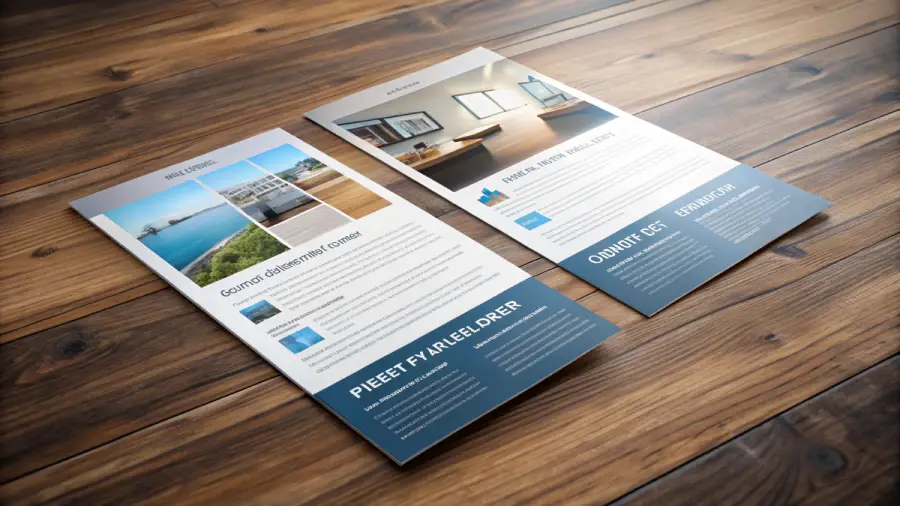
In many print marketing campaigns, the choice between Single-Sided vs Double-Sided Flyers is a strategic decision that directly impacts cost, effectiveness, and audience experience. This decision is not only about the number of printed sides. It also depends on how you deliver your message, the level of audience engagement, and the overall campaign objective.
Single-sided flyers are typically designed to communicate a clear and focused message in the shortest possible time. Their strength lies in capturing attention quickly and delivering a direct value proposition without overwhelming the audience. In contrast, double-sided flyers allow for more comprehensive content, enabling brands to guide the audience through a more structured narrative and provide additional information that supports decision-making. This fundamental difference is what makes each format more suitable for specific use cases.
In practice, many businesses choose between these two options without fully aligning the decision with their campaign goals. This can lead to either unnecessary costs or reduced communication effectiveness. Therefore, understanding the distinctions and use cases of each format is essential for making an informed decision.
In this guide, we explore the key differences between single-sided and double-sided flyers. We compare their cost structures and identify the scenarios where each format performs best. This guide helps you make a data-driven choice. It also supports better optimization of your print marketing campaigns.
Single-Sided Flyers: Uses and Limitations
Single-sided flyers are one of the most straightforward formats in print marketing. All content sits on one side of the page. This structure delivers a clear, concise, and highly efficient message without unnecessary complexity. From a design perspective, the limited space plays a critical role in shaping decisions, as every visual and textual element must directly support the core message.
This format is typically used when the primary objective is to capture attention quickly and communicate a single, focused message. Since the audience has limited time and attention, the design must immediately convey the value proposition and clearly guide the next step, whether it is visiting a website, making a purchase, or contacting the business. Many teams also review a flyer printing guide before they finalize layout decisions to ensure the message stays aligned with production standards.
In terms of application, single-sided flyers work best for quick announcements, specific offers, and broad brand awareness campaigns. In these cases, simplicity becomes a strategic advantage. It reduces cognitive load and helps the audience absorb the message instantly without friction.
However, this simplicity also introduces certain limitations. The restricted space limits room for detailed explanations, comparisons, or multi-step storytelling. As a result, if your message requires depth, context, or structured information, this format may not fully meet your communication needs.
Overall, single-sided flyers perform best when the message stays short, clear, and highly focused, and when the goal is to trigger a fast and direct response from the audience.

When Double-Sided Flyers Work Best?
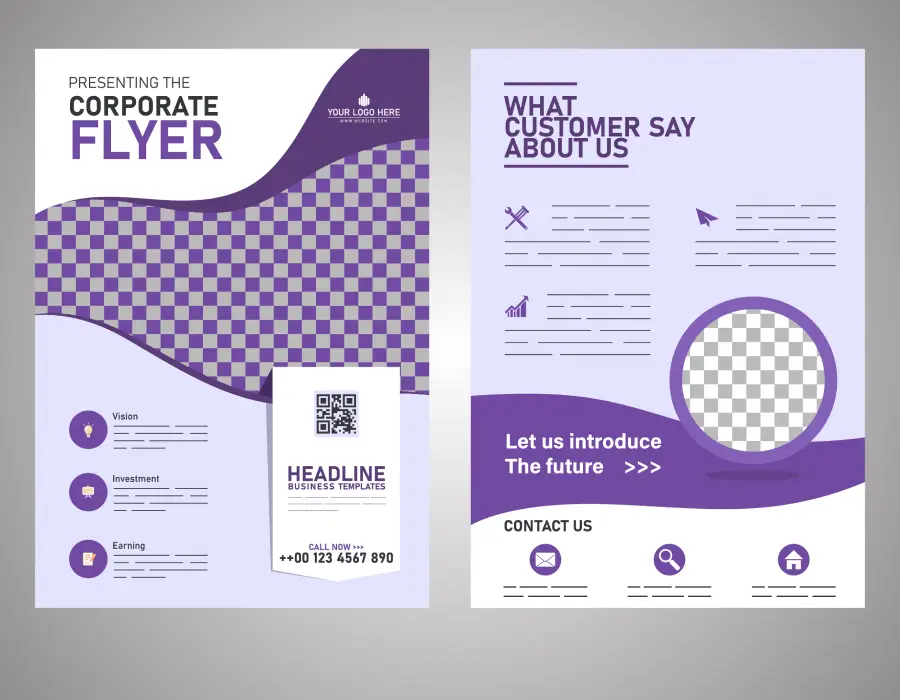
When your message goes beyond a simple announcement, Single-Sided vs Double-Sided Flyers becomes a strategic consideration—and a double-sided flyer often delivers stronger results. This format allows you to structure your content across two distinct sides, creating a clear and logical flow that guides the audience through your message. Typically, one side captures attention and communicates the core idea. The reverse side provides supporting details and deeper information.
This separation enables a more intentional user journey. The audience first engages with the key message, and if interest is generated, they naturally move to the second side to explore further details. As a result, double-sided flyers tend to perform better in campaigns where the goal is not just awareness, but also persuasion and decision-making.
From an application perspective, this format is particularly effective when you need to explain a service, build trust, or present structured information. You can outline benefits, features, or even guide the audience through a step-by-step action path. This becomes especially valuable for complex offerings where a single surface is not sufficient to communicate the full value proposition.
From a decision-making standpoint, double-sided flyers are the preferred option when:
- Your content requires detailed explanations.
- You want to deliver information in a structured, progressive format.
- The objective is to build trust and drive action.
- Brand perception and presentation quality are key priorities.
At the same time, this format demands a higher level of design discipline. If content hierarchy is not well organized, the message becomes fragmented and the audience loses focus. Therefore, a double-sided flyer delivers maximum impact only when content volume and design strategy align to support a clear and intentional communication flow.
Cost Comparison: Single-Sided vs Double-Sided Flyers
When you evaluate Single-Sided vs Double-Sided Flyers from a cost perspective, pricing does not depend only on the number of printed sides. Instead, it reflects production factors, design complexity, and overall campaign requirements.
Single-sided flyers cost less in most cases. They use only one side of the paper. This reduces ink usage, shortens production time, and simplifies the printing process. As a result, this format often suits high-volume campaigns where reach and cost control matter most.
Many teams also consider paper type options during planning, since material choice directly affects final cost and print quality. Lighter paper reduces expenses, while premium stocks increase overall production value.
In contrast, double-sided flyers require printing on both sides of the material. This increases production complexity and raises costs. Teams spend more time on design, layout, and print setup. The process also takes longer due to extended production steps.
However, double-sided formats provide more space for structured content. You can present detailed explanations, layered messaging, and trust-building information. This often improves audience engagement and message clarity.
From a strategic standpoint, cost alone should not drive the decision. You need to evaluate both cost and value. A double-sided flyer may justify higher spending when it improves clarity, engagement, or conversion rates.
The best outcome happens when you balance budget limits, message quality, and campaign goals.
Choosing the Right Flyer Format
Choosing between Single-Sided vs Double-Sided Flyers requires a structured, data-driven decision rather than personal preference. To reach the optimal outcome, you need to evaluate your campaign objectives, message complexity, budget, and audience behavior in a unified framework. The goal is to balance cost efficiency with communication effectiveness.
In real-world scenarios, each use case demands a different configuration. The table below outlines how to align your flyer format with specific campaign contexts, while also highlighting the risks of making the wrong choice and the most effective approach to mitigate those risks.
| Scenario | Key Requirement | Risk of Wrong Choice | Recommended Approach |
|---|---|---|---|
| Broad awareness campaign | Fast visibility with low cost | Message may be incomplete | Single-sided flyer with a clear, highly focused design |
| Complex service presentation | Explanation + persuasion | Loss of audience due to insufficient information | Double-sided flyer with a structured, step-by-step layout |
| Limited-time promotion | Immediate action (CTA) | Message may be ignored or overlooked | Single-sided flyer with a strong, prominent CTA |
| Branding and credibility building | Professional presentation and strong brand perception | Weak or inconsistent brand perception | Double-sided flyer with a high-quality, polished design |
| Limited budget with important message | Cost optimization without sacrificing clarity | Reduced campaign effectiveness | Carefully evaluate; often a concise double-sided or optimized single-sided approach |
From a strategic standpoint, the key takeaway is simple: a flyer’s effectiveness does not depend on format alone. It depends on how well the format aligns with your campaign goals and the level of engagement you expect from your audience.
When this alignment happens, performance and efficiency increase. Your marketing efforts also deliver stronger overall impact.
In practice, the ability to choose flyer sizes correctly plays a key role in achieving this alignment and improving overall campaign results.
Single-Sided vs Double-Sided Flyers Performance
conclusion
In selecting between Single-Sided vs Double-Sided Flyers, the first step is aligning the choice with marketing objectives and actual campaign needs. Design preference or operational constraints should not drive this decision.
A single-sided flyer delivers optimal performance when the primary goal is a short, clear, and direct message. In such cases, focusing on one core message improves audience comprehension. It also reduces cognitive friction and increases the likelihood of immediate understanding.
This format works best for broad awareness campaigns, rapid information delivery, and simple call-to-action (CTA) goals. In these cases, speed and clarity matter more than depth.
On the other hand, a double-sided flyer works better when the message has multiple layers and needs explanation, detail, or a persuasive narrative.
Using both sides helps you structure the communication flow more effectively. The first side captures attention. The second side supports decision-making with additional information, benefits, and trust-building elements.
This format fits complex services and higher-value offerings well. It also works well in scenarios where audience confidence plays a key role in conversion.
From a strategic standpoint, three core variables drive the selection between these two formats: the complexity of the message, the stage of the marketing funnel, and the available budget. Teams analyze and align these factors to make the campaign more predictable, efficient, and impactful.
Ultimately, businesses should not treat a flyer as a simple printed material. Instead, they should position it as a strategic communication asset. When teams choose and design it correctly, it contributes to improved conversion rates and stronger brand positioning.